










Tayvallich campaigner calls for tougher marine protection
An environmental campaigner from Tayvallich is among more than 50 young people who have written this month to the leaders of Scotland’s political parties calling for urgent action to protect the country’s inshore waters.


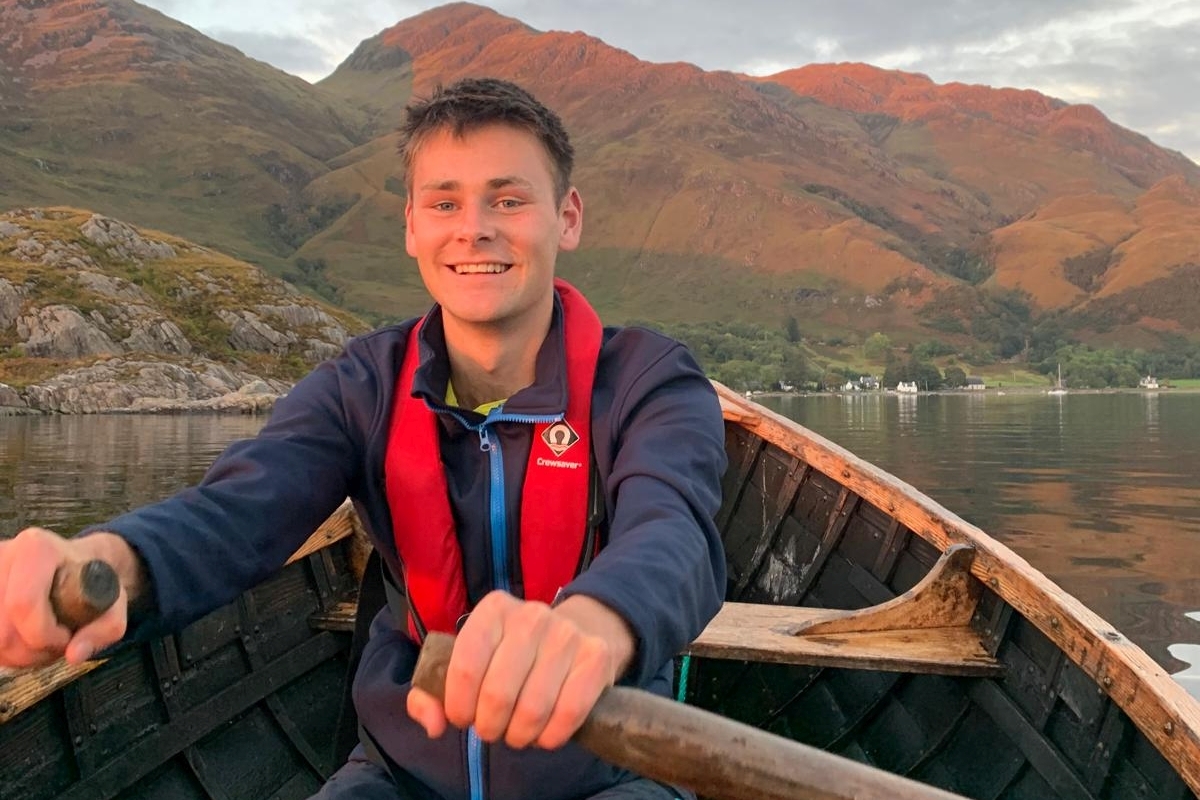
Louis MacMillan is a member of marine conservation charity Young Sea Changers Scotland (YSCS), whose members are deeply concerned that long delays and a critical lack of resources mean that fragile areas of the sea are suffering habitat loss and species decline.
With the Scottish Parliament elections less than three months away, Louis is campaigning to have marine protection placed high on the political agenda.
“I was fortunate to grow up in Tayvallich, beside the Loch Sunart to Sound of Jura MPA, one of a handful of MPAs with management measures in place,” the 23-year-old told the Advertiser.
“Growing up by the sea, we’d occasionally see trawling and dredging boats operating illegally, while just down the coast there would be regular incidents of mass salmon farm mortalities and escapes.
“For me, marine protection has more to do with opportunity than restriction. Improved management of our inshore waters will lead to a healthier marine environment, which brings with it a whole range of social and economic benefits. More low-impact fishing jobs, more eco-tourism, and a greater appreciation of our local marine wildlife.”
Louis and his fellow campaigners were prompted to write to the party leaders this month following the announcement of further delay to the process of conserving sea-life through the implementation and enforcement of marine protected areas (MPAs).
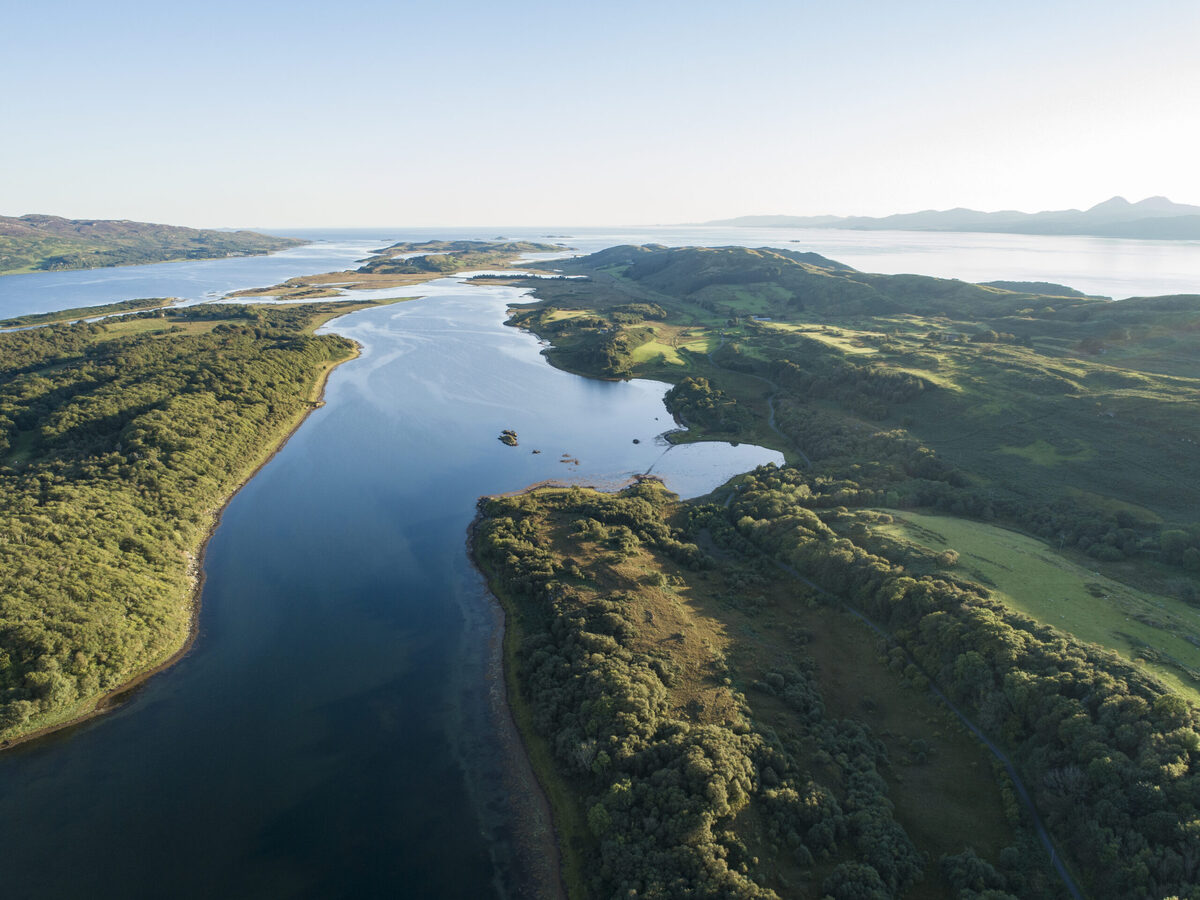
“We are deeply frustrated by the recently announced delay to the consultation on fisheries management measures for inshore Marine Protected Areas (MPAs),” the letter sent on February 4 states.
“Once again, action that is essential for protecting Scotland’s marine environment has been postponed, with little clarity or transparency about when it will happen. Without effective management, MPAs remain little more than lines on a map. Continued delays weaken marine protection and push real recovery further out of reach.
“Inshore waters are among Scotland’s most ecologically rich marine areas. They include vital nursery grounds, spawning habitats, kelp forests and seagrass meadows, yet many remain vulnerable to damaging activities such as bottom-towed fishing. Every delay increases the risk of further habitat loss and species decline and reduces the chances of genuine ecological recovery.”
The letter concludes by asking each of the leaders to make a public commitment to delivering the MPA fisheries management consultation in the first 100 days of the new parliamentary term.
Louis’s passion for protecting Scotland’s seas was, he explained, sparked by his time growing up on the Keills peninsula by Tayvallich and particularly when the community there came together in 2017 to oppose an application for a new salmon farm.
“I wrote essays on the pros and cons of salmon farming and learnt about the damaging impact of dredging,” he said. “From my house at night, I’d watch the lights of fishing boats going back and forth in an area of sea I’d been told was a ‘Marine Protected Area’.
“Fast forward several years, and I find myself engaging with marine policy because the health of our ocean is declining so dramatically that I fear for our future, and because I think we have resources and the ability to turn the situation around to create a brighter future for all.”
Louis recently attended a stakeholder engagement event in Edinburgh organised by the Marine Directorate and describes the experience as ‘highly charged’, adding that he felt the need to justify why he was there.
“I was there as a member of YSCS,” Louis explained. “It is no surprise that many young people, myself included, experience imposter-syndrome in this murky environment. We’re stepping into the process at what feels like quite a late stage, and it can feel somewhat pointless when you’re surrounded by fisheries experts and seasoned campaigners.
“But I’ve come to believe our comparative lack of experience is one of our greatest strengths. For example, during a break-out discussion centred on the difficulties with consulting fishers, I pointed out that the tools already exist to radically change the way governments approach consultations.
"Instead of relying on time-consuming online surveys, short interviews with fishers could be easily transcribed and analysed by AI, improving the quantity and quality of responses. ‘That’s not a bad idea,’ the government official noted.
“Nevertheless, it was encouraging to hear commitments by the Marine Directorate, and the Cabinet Secretary herself, to engage with young people during the consultation process for inshore MPAs.”
Why not try these links to see what our West Coast AI can tell you.
(Please note this is an experimental service)
Latest News

JOBS
Visitor Services Supervisor - Food & Beverage - Glenfinnan - National Trust for Scotland
Sign up to our daily Newsletter
Permission Statement

Yes! I would like to be sent emails from West Coast Today
I understand that my personal information will not be shared with any third parties, and will only be used to provide me with useful targeted articles as indicated.
I'm also aware that I can un-subscribe at any point either from each email notification or on My Account screen.
You may also like




Latest News
Oban ladies breeze past Lochaber in the rain

JOBS
Visitor Services Supervisor - Food & Beverage - Glenfinnan - National Trust for Scotland
Sign up to our daily Newsletters
Permission Statement
Yes! I would like to be sent emails from West Coast Today
I understand that my personal information will not be shared with any third parties, and will only be used to provide me with useful targeted articles as indicated.
I'm also aware that I can un-subscribe at any point either from each email notification or on My Account screen.



© 2026 Wyvex Media Limited.