










Seeing Stars -Are we alone?


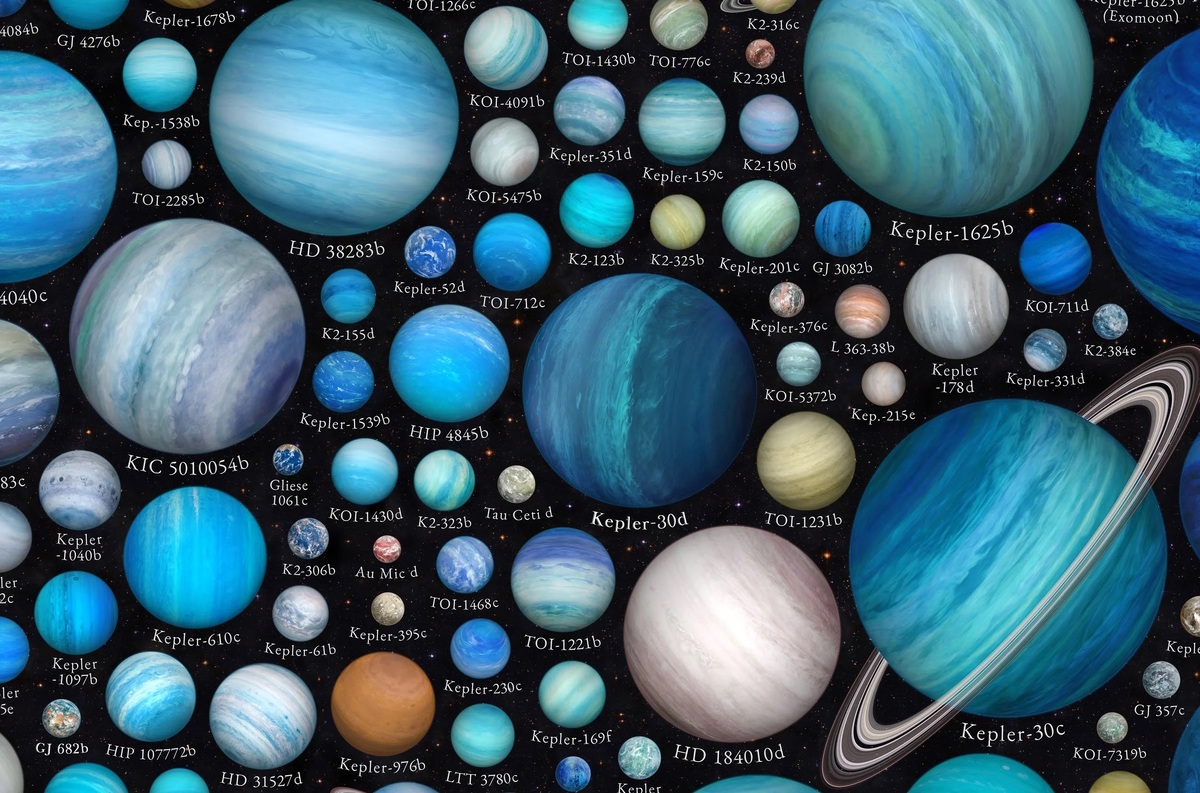
As new technology becomes available the next stage is to take a closer look at some of these exoplanets to look for signatures of alien life. Scientists can already identify molecules present in the atmospheres of exoplanets.
They do this by waiting for an exoplanet to pass in front of its star. Starlight that has been filtered through the exoplanet’s atmosphere allows scientists to identify each atmospheric chemical.
Space telescopes such as the James Webb Space Telescope are been used to probe the atmospheres of exoplanets. Abundant molecules such as methane, carbon dioxide and water have all been detected, however less abundant molecules are more difficult to detect with our current technology.
Importantly, in order to help us answer the ‘Are we alone?’ question, certain molecules can give away the presence of life. These are called biosignatures.
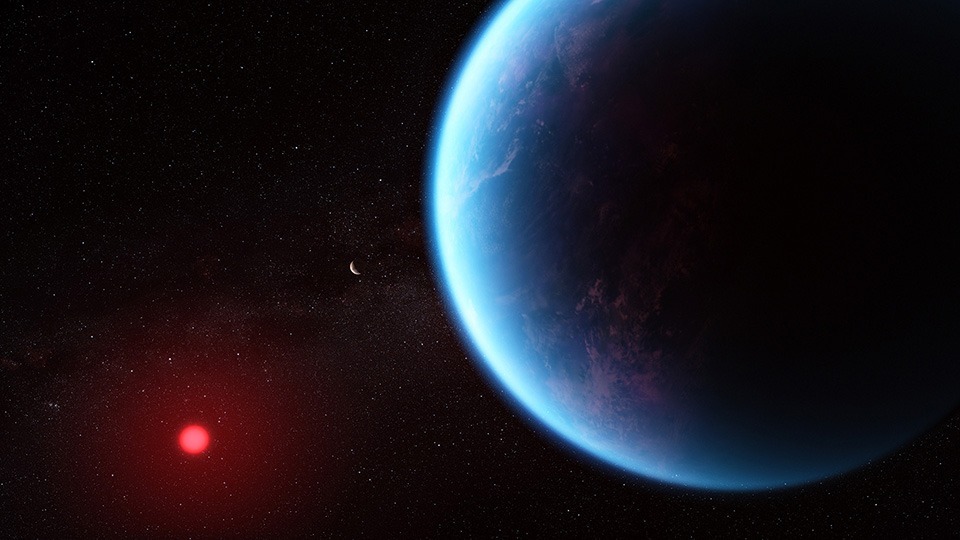
Last year a possible biosignature was detected for an exoplanet known as K2-18b.
When scientists studied the starlight passing through the exoplanet’s atmosphere they detected dimethyl sulfide.
On Earth this is produced by microscopic life in our oceans so perhaps K2-18b is an ocean planet with marine life.
However these are very early days in the identification of biosignatures on exoplanets and much more work needs to be done before we can certainly say that life has been discovered elsewhere in the universe.
New space telescopes launching in the coming years will allow us to learn a lot more about exoplanets.
European spacecraft known as the Plato Telescope and Ariel Telescope will look for exoplanets similar to Earth and analyse the atmosphere composition to search for biosignatures.
A US spacecraft called the Nancy Grace Roman Telescope will allow scientists to see much fainter exoplanets and and the Habitable Worlds Observatory will study Earth-like exoplanets to discover just how habitable they are.
This telescope will even be able to look for biosignatures and determine if vegetation exists by spotting molecules that indicate photosynthesizing plants.
It is very likely that within the next twenty years we will detect life on an exoplanet. The answer to ‘Are we alone?’ is closer than most people believe.
Why not try these links to see what our West Coast AI can tell you.
(Please note this is an experimental service)
Latest News


JOBS
OOW DECK OFFICER 3 weeks on, 3 weeks off - Trident Aqua Services UK LTD
Admin Officer - Payroll & Pensions - ARB17414 - Argyll and Bute Council
Sign up to our daily Newsletter
Permission Statement

Yes! I would like to be sent emails from West Coast Today
I understand that my personal information will not be shared with any third parties, and will only be used to provide me with useful targeted articles as indicated.
I'm also aware that I can un-subscribe at any point either from each email notification or on My Account screen.
You may also like

Campbeltown Courier From Our Files 6.3.26

Carrick Castle Estate Wedding Open Day – Saturday 14 March, 12 - 4pmSPONSORED ARTICLE




Latest News

JOBS
OOW DECK OFFICER 3 weeks on, 3 weeks off - Trident Aqua Services UK LTD
Admin Officer - Payroll & Pensions - ARB17414 - Argyll and Bute Council
Sign up to our daily Newsletters
Permission Statement
Yes! I would like to be sent emails from West Coast Today
I understand that my personal information will not be shared with any third parties, and will only be used to provide me with useful targeted articles as indicated.
I'm also aware that I can un-subscribe at any point either from each email notification or on My Account screen.



© 2026 Wyvex Media Limited.