










Bids to keep holiday plots on SSSI fail
People who bought plots of land on an SSSI at Achnabobane near Fort William cannot build accommodation on it, after the Scottish Government rejected all 30 appeals against a council ruling.


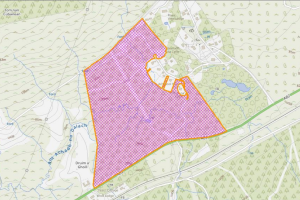
The decision by Scottish Ministers is the latest chapter in a long-running saga affecting dozens of individuals and companies at the spot between Torlundy and Spean Bridge, which is designated a Site of Special Scientific Interest (SSSI).
Back on February 20, The Highland Council (THC) sent an enforcement notice to 84 parties, as owners, occupiers, or persons with an interest in land at Achnabobane, 120m north of Fern Cottage, Spean Bridge.
Most of the listed addresses are in the UK, but some are as far away as Gibraltar, Dubai, and Australia. Company names include the words ’staycations’, ’hideaways’, ’leisure’, and even ’renewable energy’.
The council’s enforcement notice says there "appears" to have been "a breach of planning control".
The alleged breaches include a change of use, by developing woodland to create a mix of trees and "individual development plots for leisure/recreation including overnight accommodation".
THC also lists the "siting/installation of camping ’pods’ and caravans", and "engineering operations" to form "hardstanding" and "access tracks".
The "unauthorised development", THC says, was undertaken without planning permission. It also conflicts with policies, causing "harm" to the landscape character, and "significant damage" to the geodiversity of the SSSI.
As remedy, THC required all 84 parties to cease using the land for "leisure/recreation including overnight recreation", as well as remove the camping pods, caravans, building materials and debris, and reinstate the land affected by the "unauthorised engineering operations".
Failure to comply is an offence, it says, with penalities reaching a £50,000 fine.
The 84 parties had a right to appeal, and 30 did so to the Scottish Government’s Planning and Environmental Appeals Division (DPEA). The DPEA reporter ruled on July 21, dismissing all 30 appeals, and upholding THC’s enforcement notice.
Read More

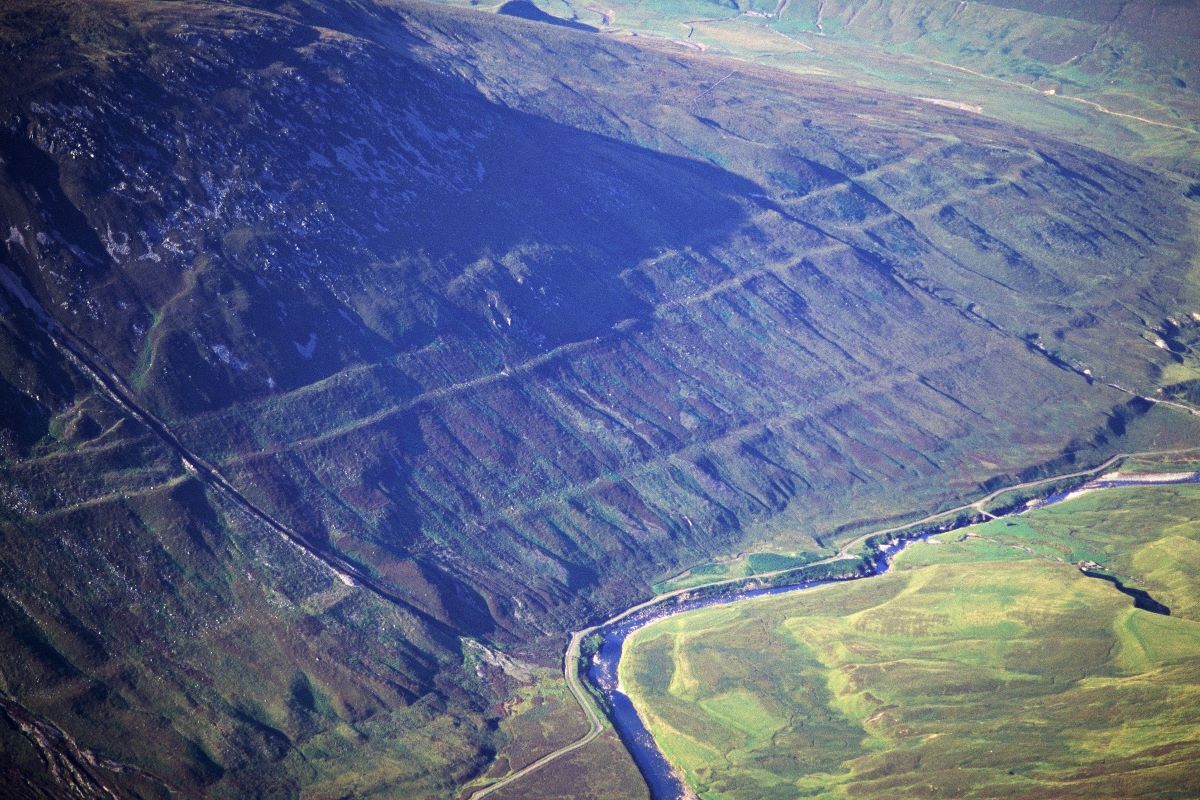
The DPEA published each of the 30 decision letters on its website. In one, the reporter says: "The ownership of the land is complex, with individual plots having been sold to many unrelated individuals and companies.
"Some of these plots have been physically demarcated on the land with fencing, but many are only capable of being individually identified with reference to title plans, where a sale has been made.
"There are numerous other plots that have been (and as far as I am aware may continue to be) marketed for sale, but which are not currently physically defined.
"Tracks provide direct access to notional individual plots. Some plots have seen reprofiling works and/or the formation of hardstandings, whilst some plots also have overnight accommodation units sited on the land.
"It seems highly likely that the original landowners have been the driving force behind the marketing (with a surprising level of success) of an ostensible ‘masterplan’ for the land as a whole, as an opportunity (whether as an investment or for lifestyle/recreational purposes) to acquire individual plots amongst many others for the primary purpose of siting some form of short-stay accommodation upon it, in amongst retained areas of woodland.
"I consider there to be a high probability that this perceived ‘development potential’, however speculative or misinformed, would have been the main reason for purchasing the plots. I can see no other plausible reason for why the individuals concerned would wish to purchase the land in question.
"In some of the appeals the purchase price has been disclosed, which appear to be significantly greater than the likely market value for purely its lawful use, which adds weight to this assertion.
"Those who have purchased plots have thus both literally and figuratively ‘bought in’ to the concept of the site as a whole being used for the siting of accommodation, be it camping pods, chalets or caravans, with shared access arrangements.
"It is plainly the case that the land is being used for the siting of accommodation suitable for overnight habitation, and that is also their clear purpose.
"I consider it highly likely that overnight stays at the accommodation sited on the land have occurred.
"This material change of use of the land is not permitted development, nor does it have planning permission."
The reporter said the enforcement notice cannot reinstate the "permanent and irreparable damage" done to the SSSI’s "subsurface geomorphological features", but can rectify the breach of planning control and visual impact, and prevent further damage to the SSSI.
The parties have six weeks to appeal to the Court of Session.
Police Scotland told us: “We are aware of concerns raised locally relating to SSSI sites at Achnabobane, Lochaber.
“Enquiries are ongoing to establish the full circumstances and officers are working with partner agencies.”
Latest News




JOBS
Health Safety and Environment Advisor - RSPB
Sign up to our daily Newsletter
Permission Statement

Yes! I would like to be sent emails from West Coast Today
I understand that my personal information will not be shared with any third parties, and will only be used to provide me with useful targeted articles as indicated.
I'm also aware that I can un-subscribe at any point either from each email notification or on My Account screen.
You may also like


Stewart Cup winners

LET THE SHOWS BEGIN...

North Shinty Round-up - May 11 2026


Latest News


JOBS
Health Safety and Environment Advisor - RSPB
Sign up to our daily Newsletters
Permission Statement
Yes! I would like to be sent emails from West Coast Today
I understand that my personal information will not be shared with any third parties, and will only be used to provide me with useful targeted articles as indicated.
I'm also aware that I can un-subscribe at any point either from each email notification or on My Account screen.



© 2026 Wyvex Media Limited.