










Inveraray shielings added to historical records
A collection of shielings near Inveraray, in a mature Forestry and Land Scotland timber block, have been added to historical records.


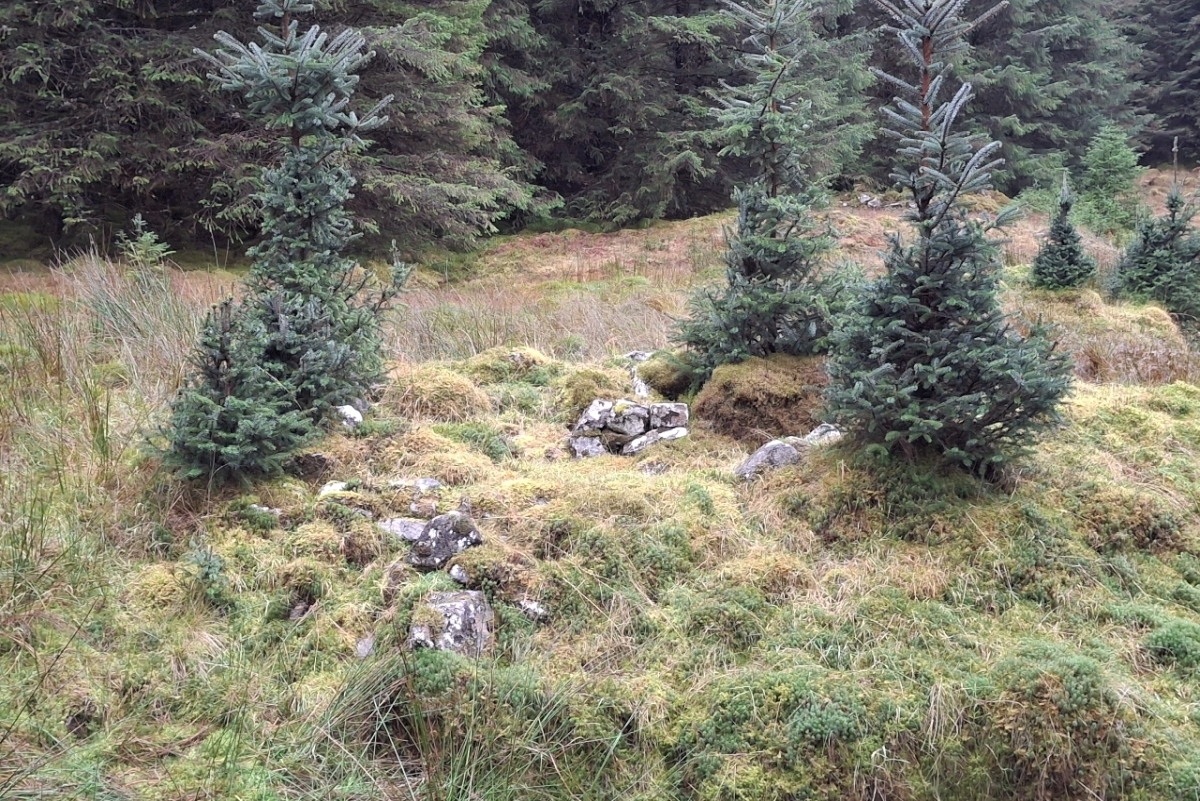
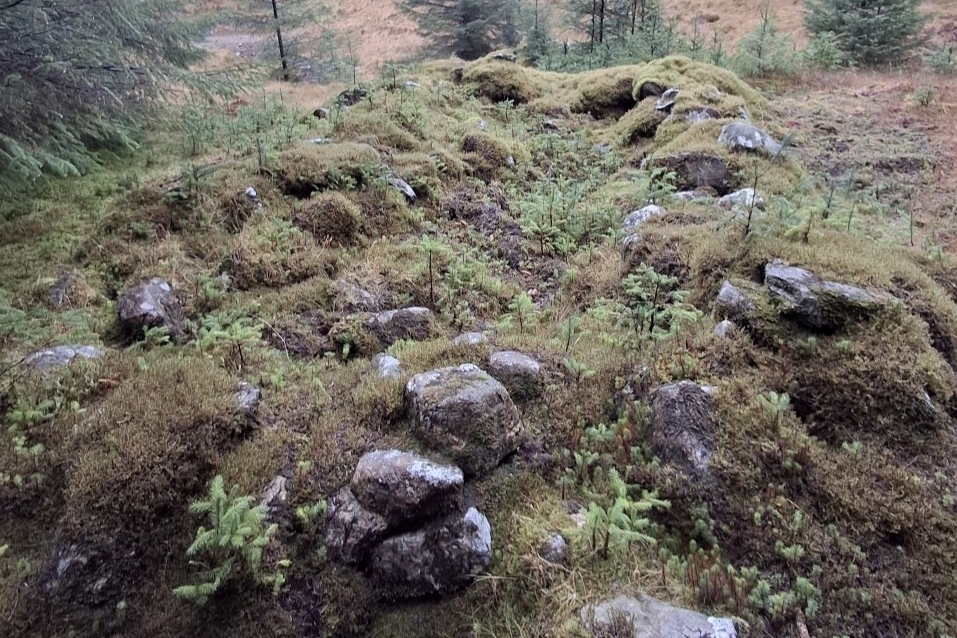
Thanks to an environmental survey carried out ahead of the sale and harvesting of the area, the historical structures - roughly constructed huts used to watch out for animals while they grazed the area - were found tucked away on a little bend in Allt nam Muc burn.
Not previously recorded on any historical map, the remains of the shielings are now registered as part of the West of Scotland Archaeology Service’s (WoSAS) records.
FLS Environment Ranger Megan Curtis, who submitted the details of the shielings, said: “A large part of my job is doing checks before any operational work is started including ahead of any harvesting work.
“This is to identify and then protect vulnerable wildlife and habitats along with any historical features. With this information operational colleagues can meet environmental and conservation standards.
“The shielings are surrounded by mature conifers and past practices may not have demanded that specific measures were taken to protect and record them.
“But today, there is a strong focus on ensuring the natural and cultural heritage on the land we manage is protected, conserved and enhanced.
“FLS policy is to put a buffer around shielings and other historical structures to protect their heritage features when planting new forests along with working with relevant organisations to record and preserve them.
“At this site, we will carefully remove any regeneration and put a buffer around the shielings to protect them from future felling and restocking operations.
“WoSAS, logs, updates and provides advice on managing heritage features in the area. It’s amazing to see the number of historic features their maps show and it’s important for FLS to continue to contribute to this important database.”
Shielings were used in Scotland for at least two thousand years, from the end of the Iron Age until they were largely phased out in the 18th and 19th centuries.
However, in remote areas like the Outer Hebrides they continued to be used until the mid-20th century.
The shelters were part of a seasonal farming practice called transhumance – a system that involved moving livestock to upland pastures during the summer months.




Sign up to our daily Newsletter
Permission Statement

Yes! I would like to be sent emails from West Coast Today
I understand that my personal information will not be shared with any third parties, and will only be used to provide me with useful targeted articles as indicated.
I'm also aware that I can un-subscribe at any point either from each email notification or on My Account screen.
You may also like


MV Isle of Islay begins journey to Scotland


Oban darts relaunches in its new home




Sign up to our daily Newsletters
Permission Statement
Yes! I would like to be sent emails from West Coast Today
I understand that my personal information will not be shared with any third parties, and will only be used to provide me with useful targeted articles as indicated.
I'm also aware that I can un-subscribe at any point either from each email notification or on My Account screen.



© 2026 Wyvex Media Limited.