










Creel fishers and scientists team up to listen beneath the waves
Marine scientists wanting to listen to life beneath the waves are appealing for more help from the West Coast’s creel fishing community.


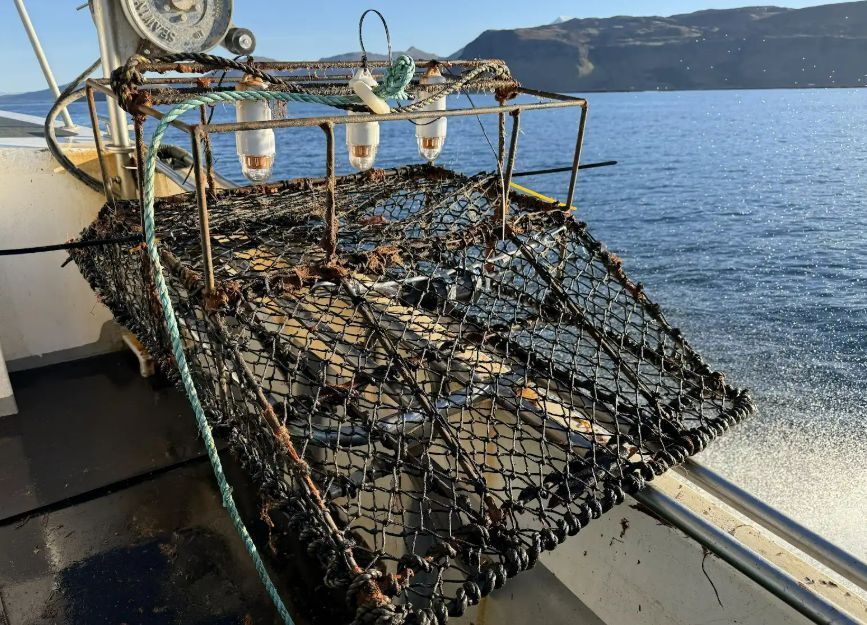
Mull’s fishing community and businesses have already got behind a project called Creeling for Sounds, an initiative being led by the Hebridean Whale and Dolphin Trust (HWDT) to test whether underwater acoustic recording devices can be safely and effectively used alongside working creel fishing gear.
Creel pots have been donated and practical knowledge has been shared to help design robust kit that can
Now HWDT are looking for more creel fishing folk to get involved throughout January, February and March, as part of the collaborative project, teaming up with scientists.
The community-led initiative hopes to find out whether this could be a year-round way of monitoring of whales, dolphins and porpoises in Scottish waters.
Anyone one interested in taking part would be asked to attach acoustic recorders to their pots, the quality of the data collected and how practical it is for the listening kit to be used - would all be assessed.
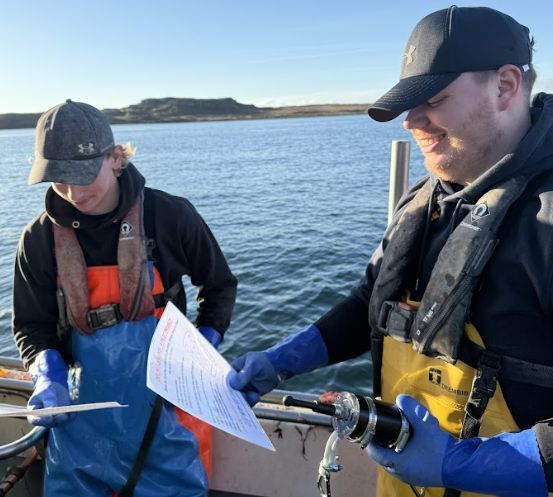
HWDT hopes the findings will show whether this low-impact, collaborative method could be scaled up to support long-term monitoring of marine mammals and underwater noise across the whole of Scotland’s coastline.
“Cetaceans spend most of their lives underwater and rely heavily on sound to communicate, navigate and find food,” said Hannah Lightley who is HWDTs Science Officer.
“But winter conditions and limited survey opportunities mean we still have significant gaps in our understanding of how these species use our seas year-round,” she added.
Passive Acoustic Monitoring (PAM) offers a non-invasive way to detect cetaceans and check for changes in the marine soundscape, including the impacts of human-made noise.
The information gathered is increasingly important for meeting national and international commitments, particularly in and around Marine Protected Areas (MPAs) says Hannah.
She said from the outset, the Isle of Mull community has played a central role in shaping the project.
During the initial trial phase, a local fishing vessel worked closely with HWDT’s science officer to test deployment and retrieval techniques, recorder positioning, and ways to minimise interference with fishing operations.
The project is designed to answer key questions, including whether acoustic devices can be safely used with active gear, whether fishing-related noise affects recording quality, and how manageable the process is for fishermen in day-to-day operations.
This project is being supported by a grant of £29,937 from the Scottish Government’s Nature Restoration Fund, managed by the Scottish Marine Environmental Enhancement Fund.
Sarah Brown, SMEEF Manager said, “At the Scottish Marine Environmental Enhancement Fund we are always looking for exciting ideas like HWDT’s innovative Creeling for Sound project. Working with the creel sector they have identified an opportunity to use emerging technologies to increase our
understanding of nature in really challenging habitats. They say we know more about the surface of the moon than we do about our seas and this is one small step towards changing that!”
The west coast of Scotland is internationally recognised for its marine wildlife, including harbour porpoises and minke whales, both of which are protected species and key monitoring targets within local MPAs.
Fisher-led acoustic monitoring could help fill critical data gaps both inside and outside protected areas and if successful, Creeling for Sounds could offer a model for long-term, community-based marine monitoring, say those behind the project.
Why not try these links to see what our West Coast AI can tell you.
(Please note this is an experimental service)
Latest News




JOBS
General Manager - Visitor Centre & Larder Cafe - The Highland Soap Co. Ltd
Sign up to our daily Newsletter
Permission Statement

Yes! I would like to be sent emails from West Coast Today
I understand that my personal information will not be shared with any third parties, and will only be used to provide me with useful targeted articles as indicated.
I'm also aware that I can un-subscribe at any point either from each email notification or on My Account screen.
You may also like



Are you happy in nature?
Splashing read - Knobble The Minke Whale

Rust to riches, a Land Rover's tale
Latest News
JOBS
General Manager - Visitor Centre & Larder Cafe - The Highland Soap Co. Ltd
Sign up to our daily Newsletters
Permission Statement
Yes! I would like to be sent emails from West Coast Today
I understand that my personal information will not be shared with any third parties, and will only be used to provide me with useful targeted articles as indicated.
I'm also aware that I can un-subscribe at any point either from each email notification or on My Account screen.



© 2026 Wyvex Media Limited.