










Rising tide of discontent grows as Arran’s “voice ignored”
An ever-increasing tide of discontent is growing on Arran with residents and organisations voicing their frustration at being constantly overlooked, ignored or treated as less of a priority.


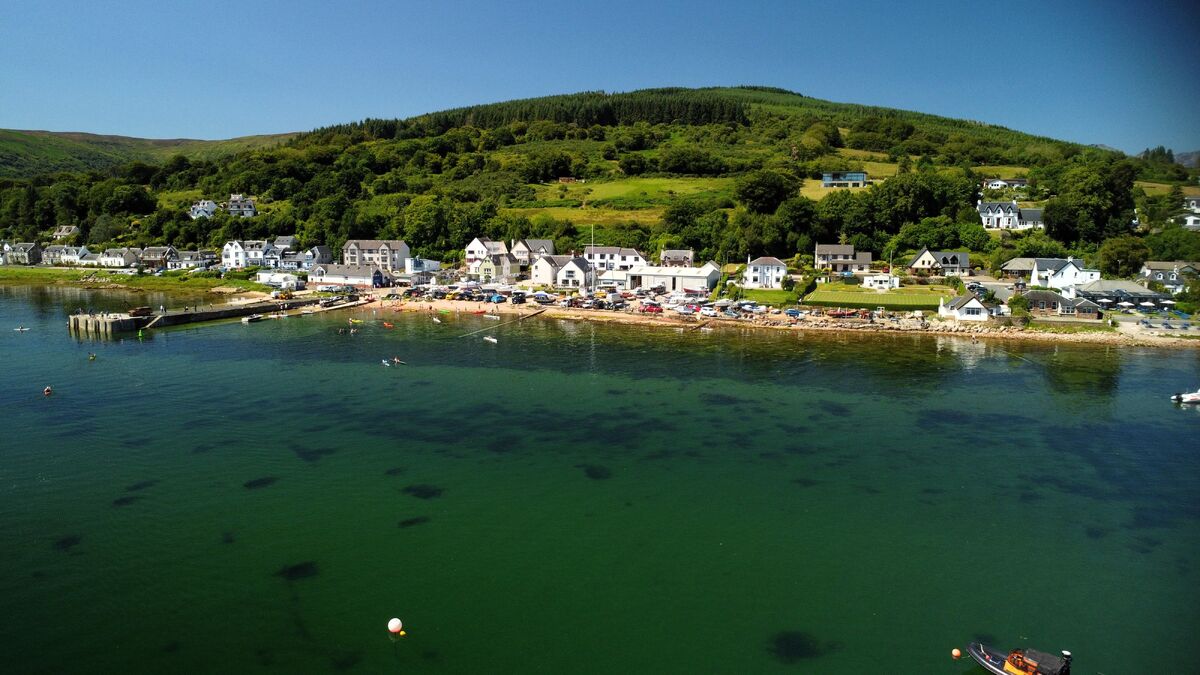
Arran’s island situation, which presents unique challenges and differs vastly from its mainland counterparts, is supposed to be considered – as ensconced in the Island Act 2018 – when decisions are made for the island.
However, accusations are being levelled with alarming regularity that a one-size-fits-all approach is frequently taken and that decisions, often wholly inappropriate for islanders, are being made off-island, in Irvine, Gourock, Edinburgh or London.
The situation neared boiling point recently when a consultation was held by North Ayrshire Health and Social Care Partnership (NAHSCP) about proposed cuts to health and social services on the island. At the meeting, which could not accommodate the masses of people who turned out to make their voices heard, residents pleaded with officials to consider the implications of cuts on a remote island community where services are already less-accessible than on the mainland.
Emotional pleas were made on behalf of Arran’s elderly who will be plucked from everything familiar to them and placed on the mainland far from their loved ones. Desperate attendees implored officials to consider the impact on the elderly and those who will face significant ferry challenges to visit and support them.
Arran councillor Charles Currie accused NAHSCP of treating Arran communities with “disdain”, saying that the decision will split families which will become separated by the sea.
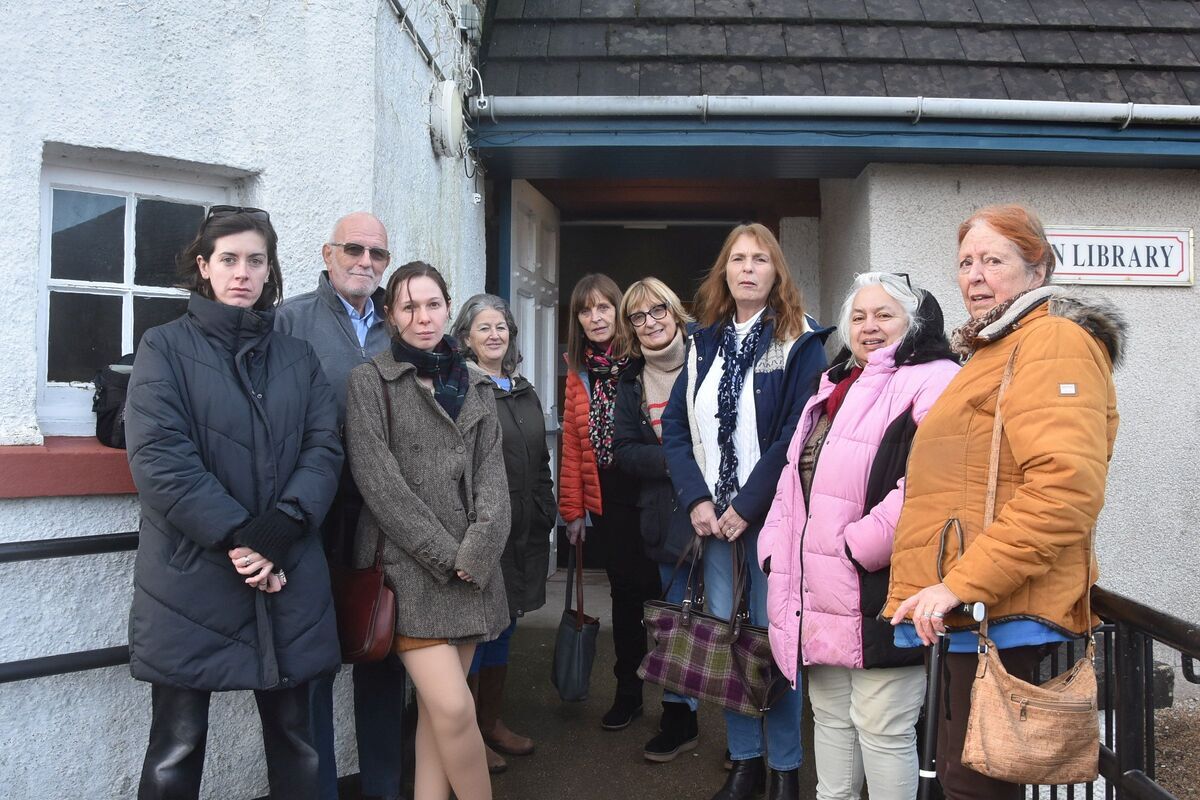
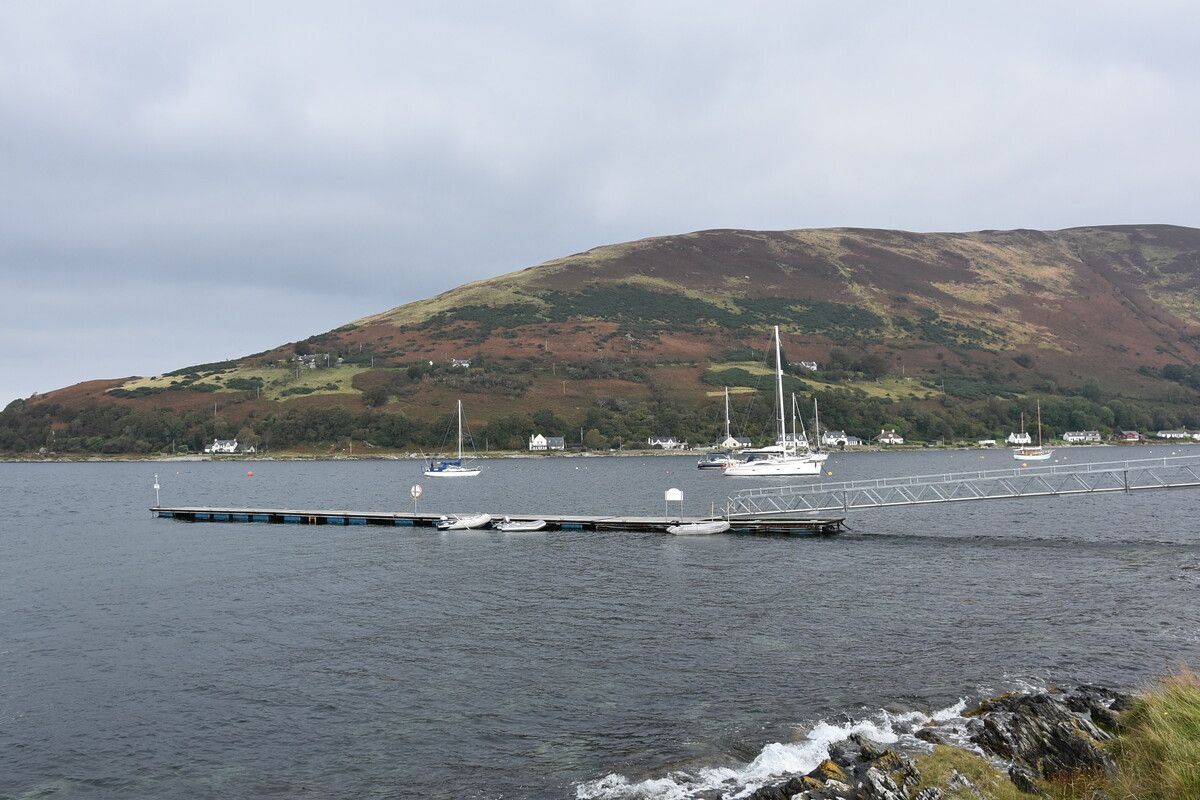
And then there is the group campaigning for basic protected step ashore facilities for boats, who have been battling council officials for improvements to Arran’s marine infrastructure for over 50 years. Conservationist, Howard Wood OBE, asserts that Arran’s marine infrastructure lags far behind other Scottish islands by 20 years – even when compared to other Scottish islands with a fraction of Arran’s population.
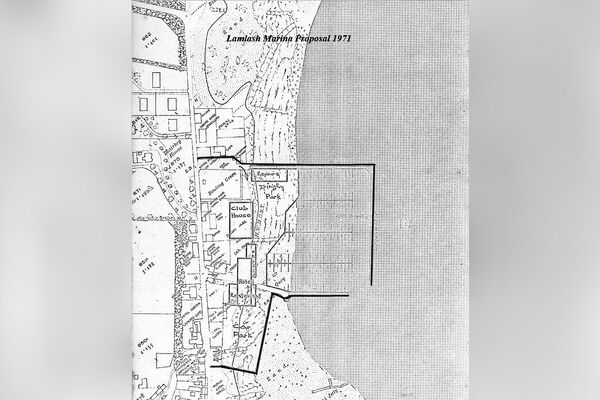
The fight for investment for a marina on Arran began in 1970 when Arran fell under the jurisdiction of Buteshire Council, before it became part of the Cunninghame district within the Strathclyde region. In 1971 the Travis Report recommended Lamlash as an ideal place to site a marina, owing to its natural shelter, strategic location and popularity. The recommendation was made as part of plans to develop fully protected marinas across the Firth of Clyde to bring economic benefit to Clyde communities.
Despite the recognition of early need and opportunity and the positive impetus, no marina was built on Arran throughout the 1970s and 1980s, while other islands, such as Islay and Barra, were able to reap the social and economic benefits of having marinas.
The disparity and inequality of marine infrastructure is apparent when compared to other island communities. South Uist, with a combined populations of 4,846 from South and North Uist has a 52-berth marina at Lochboisdale; Mull with a population of 2,667 has a 60-berth marina at Tobermory; Islay’s population of 3,200 has a 34-berth marina at Port Ellen; Isle of Kerrara’s 34 inhabitants have a 80 berth marina; Harris, Tarbert, with a population of 1,650 has a 50 berth marina and Scalloway, Shetland, with a population of 1,479 has a 120-berth marina. Arran with a population of 4,600 has no fully protected marina.
Remedying the situation has not been for a lack of effort, yacht and boat owners on Arran have been raising concerns about the lack of facilities for decades.
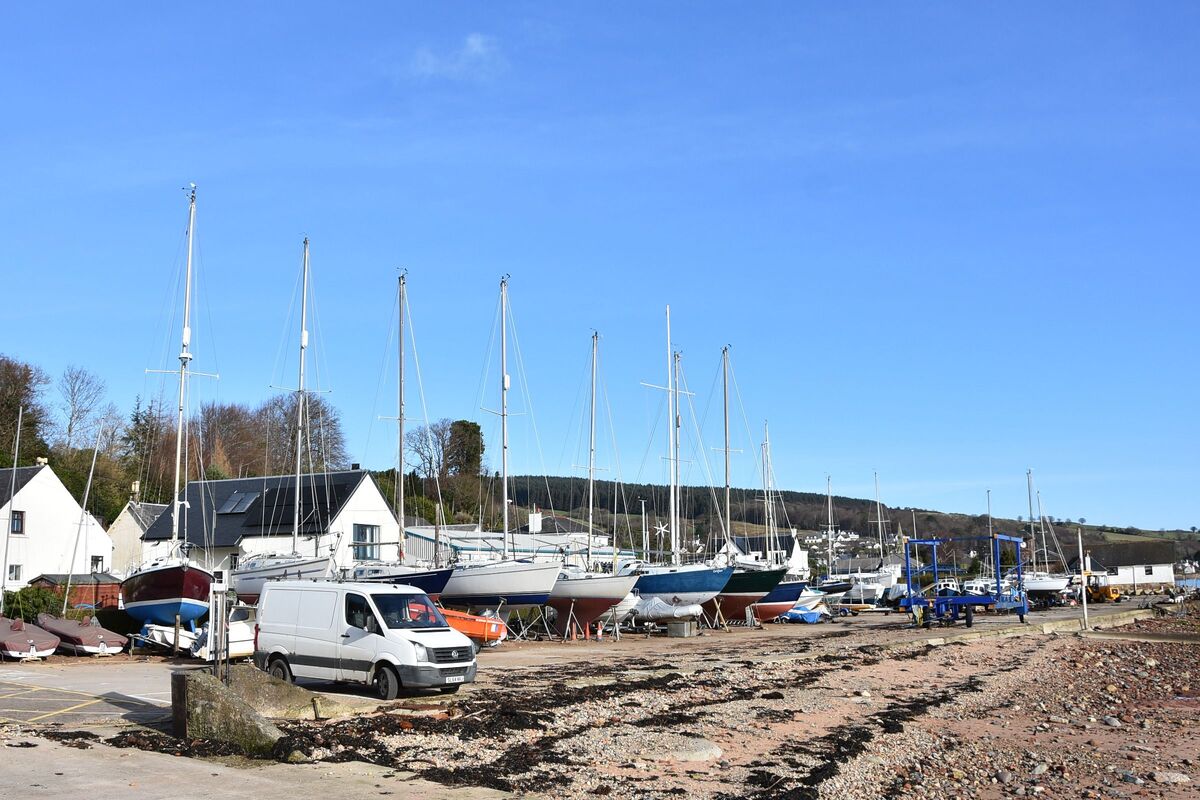
Hopes were raised in the 1990s, and after the millennium, and in the ensuing decades after a succession of council and government development studies made the case for developing Arran’s marine infrastructure. Sadly, the marina group faced disappointment after disappointment when dealing with Scottish Government and local authority bureaucracy.
Campaigners saw some light at the end of their 50 year tunnel when, in 2019, the Scottish and UK Governments announced the Ayrshire Growth Deal worth £251m with £23.5m allocated for marine tourism investment in North Ayrshire. In a pattern now familiar to islanders, the grandiose figure and scope of the project were eroded, and by January 2025 the amount available for Arran was less than £2m in practical terms. This could, at best, fund the creation of seasonal pontoons in Brodick and Lamlash, however, these would only be of use during certain months of the year, and in certain favourable weather conditions.
Assertions of unfair treatment and postcode inequality, by both the marina and health and social care campaigners, are backed by financial figures which, according to them, prove that Arran “pays more but gets less.”
According to Arran’s Tom Tracey, Arran households pay around 53 per cent more council tax than the average North Ayrshire ward. Arran generates approximately £2m above the average ward and this will increase to £2.5m next year with the increase in second home council tax. Yet, Arran has the lowest average household incomes, the poorest access to services, the weakest infrastructure, the highest social rents and the highest cost of living in the council area.
North Ayrshire consistently ranks at or near the very bottom of the league tables for healthy life expectancy in both Scotland and the UK. The region also has the lowest, or joint-lowest, healthy life expectancy in Scotland for both men and women.
The imbalance of funding applies to both the marina funding and that of the health and social care situation. Scottish Government funding for its 32 councils, in particular to support island health services, campaigners say, is worked out according to a National Resource Allocation Formula that does not adequately take into consideration healthy life expectancy in the region, population requirements, or the 400,000 visitors to Arran annually, or the above average contributions from Arran.
Equally, in the case of the marine lobbyists, Arran’s allocation of Ayrshire Growth Deal funding pales into insignificance when compared to other localities, like at Cumbrae where £4.4m has been allocated to a 80-100 berth marina - located behind the new £48m Millport breakwater, two kilometres away from the 600 berth marina at Largs.
Adding to the marine lobbyists’ frustrations is that Arran has, for over 50-years, been denied a huge economic opportunity despite being in the centre of the second busiest boating area in the UK. These missed opportunities could have provided compounded and exponential benefits for the whole island, as outlined in numerous studies which illustrate significantly increased economic opportunities and social benefits of well-developed marine infrastructure on islands with year round facilities.
Arran resident, Howard Wood OBE, voiced his frustration: “The centralisation of services and decision-making by both the Scottish Government and councils has been a disaster for Arran.
“Decisions are taken by distant bureaucrats with no understanding of island life. Too many of those decisions, from ferries to basic infrastructure, have proved financially disastrous for taxpayers and devastating for Arran’s already fragile economy. Islanders are no longer prepared to accept this situation.”
Allegations of Arran’s needs and voice being ignored have also been highlighted by the chair of Arran Community Council, Tom Young, who contacted North Ayrshire Integration Joint Board (IJB), appealing to open a line of communication between the respective bodies.
In a concerned letter regarding potential cuts to health and social services, Mr Young said: “There has been no consultation with Arran Community Council as part of this process which is somewhat surprising as we are the one statutory consultative body on the island; particularly regarding such a major change of service.”
Mr Wood expressed a similar sentiment and said that, after a decade of ferry disruption and failures which have eroded the Arran economy, Arran residents are increasingly being portrayed as habitual complainers and moaners by many on the mainland and within government.
Citing long-term governance failures, centralised decision-making and a lack of democratic control as valid reasons for the growing discontent, Howard lamented: “Arran is not seeking special treatment. It is seeking parity, accountability, transparency and the right to shape its own future.”
Why not try these links to see what our West Coast AI can tell you.
(Please note this is an experimental service)
Latest News



JOBS
Modern Apprentice (Health & Social Care - SCQF6) - NAY16758 - North Ayrshire Council
Shop Assistant in our Highland Soap Visitor Centre (Maternity cover and summer temp) - The Highland Soap Co. Ltd
Sign up to our daily Newsletter
Permission Statement

Yes! I would like to be sent emails from West Coast Today
I understand that my personal information will not be shared with any third parties, and will only be used to provide me with useful targeted articles as indicated.
I'm also aware that I can un-subscribe at any point either from each email notification or on My Account screen.
You may also like


Arran Banner Letters – week 08, 2026
Arran Banner Leader: Quid pro quo communication

Goatfell runner survives 1,500ft fall
Open day will shed light on Arran’s Freemasons
Latest News


JOBS
Modern Apprentice (Health & Social Care - SCQF6) - NAY16758 - North Ayrshire Council
Shop Assistant in our Highland Soap Visitor Centre (Maternity cover and summer temp) - The Highland Soap Co. Ltd
Sign up to our daily Newsletters
Permission Statement
Yes! I would like to be sent emails from West Coast Today
I understand that my personal information will not be shared with any third parties, and will only be used to provide me with useful targeted articles as indicated.
I'm also aware that I can un-subscribe at any point either from each email notification or on My Account screen.



© 2026 Wyvex Media Limited.