










Arran Banner Letters – week 07, 2026
Readers’ opinion – week 07, 2026



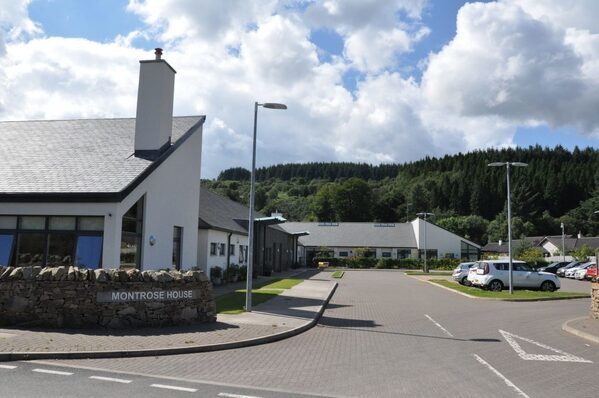
Included below is a copy of a letter to North Ayrshire Council’s chief executive, Craig Hatton, which makes a formal complaint regarding the North Ayrshire Health and Social Care Partnership’s recent consultation on the future of Montrose House. Changes to services at Montrose House has also spurred a reaction from Arran Community Council which has written to North Ayrshire Integration Joint Board (IJB).
Delivering social care services within budget consultation
Dear Mr Hatton,
We are writing to formally complain about the timing, content, process, irresponsibility and wastefulness, of the recently completed “consultation” into proposed cuts to social care services within North Ayrshire.
Timing
The timing of the consultation was over the holiday period, which made it difficult for disabled people and unpaid carers to attend due to other commitments and therefore directly impacted their ability to contribute and also impacted on the sharing of this information through third sector organisations. The promotion of the events was haphazard to say the least, only being published on North Ayrshire’s website and Facebook page and in libraries.
If real consultation was sought every service user and unpaid carer in North Ayrshire should have been contacted, and professionals involved with service users should have been instructed to discuss it with them.
Content
The content of the questions was inappropriate and misleading; it was not co-produced with service users and gave no context to people who are unaware of existing legislation and guidance about self-directed support.
Question 1
The first box asks about choice and control over how support is delivered as an option, choice and control are the cornerstone of Self-Directed Support legislation and should be non-negotiable. Choice and control are not discretionary policy options, they are statutory entitlements under the Social Care (Self-Directed Support) (Scotland) Act, and consultation can not be used to dilute or renegotiate statutory rights that Parliament has already established. Therefore, asking people to choose it as an option is void of purpose. Again, asking to choose between maximising independence or personal care is also unreasonable. Due to the nature of people’s conditions and disabilities different solutions are required for different people. Is North Ayrshire HSCP proposing the person’s impairment is irrelevant when doing an assessment and everyone will get the same supports?
Question 2
Asking members of the public, who may only have experience of their own personal situation, to prioritise things that are all basic human rights, is disingenuous at best and verging on manipulation at worst. Pitting one client group against the other is unacceptable. Inviting members of the public to prioritise between supports that are fundamental to dignity, safety, and wellbeing risks undermining the statutory rights-based approach.
Question 3
Again, this is another question that shouldn’t be asked. We wonder how you prioritise personal care over non personal care and ensure that a person needing nutrition obtains the food they are going to eat? Assessment of need, risk, and potential harm is a statutory and professional responsibility, requiring appropriate qualifications and safeguards. It cannot be delegated to the general public through a consultation exercise. Using consultation responses to inform decisions that should be based on professional assessment creates a significant risk of unlawful and unsafe outcomes.
Question 6
Mentions fairness. At the most basic level “equality” does not simply mean that everyone gets the same amount of money spent on them, it means that everyone should get the support they need that is pertinent to their circumstances. Asking the public to answer questions on things that are determined by qualified professionals is dangerous and misguided. Asking them to expand their answer in question seven is pointless.
Question 8
Again, asking the public to answer questions about harm and risk is outrageous and pointless as these risks can only be assessed by a qualified person.
Question 10
Asking people if choice and control is important when it is the cornerstone of SDS legislation is completely pointless, unless of course NAHSCP is proposing that it overrides and disregards national legislation? This question was also asked previously in question one.
Question 11 and 12
Limitations on costs; there is no context to this question as different client groups cost different amounts. If everyone agrees that answered the survey, that there should be a cost limit, what cost limit is being proposed and what is going to be done about the clients that cost too much? No-one could answer this question at the consultation event. Introducing cost limits without reference to individual assessed need risks substituting budgetary considerations for lawful decision-making. Affordability cannot lawfully override statutory duties to assess and meet eligible needs.
Question 15
Asking how these proposals will affect people is a question that shouldn’t be asked. If the HSCP doesn’t know the answer, we would be even more concerned than we were previously. At best people will be miserable, unwell and isolated and at worst they will die. If the likely impacts of these proposals are not clearly understood by the partnership, this raises serious concerns about whether foreseeable harm is being adequately considered or mitigated. Decisions that result in withdrawal or reduction of essential care engage fundamental rights relating to dignity, autonomy, and family life.
The process
Disabled people, unpaid carers, and people with complex needs should have been involved at the earliest stages of shaping both the proposals and the consultation questions, in line with the principles of co-production and participation, and the common law duty of fair consultation. As a reminder of that common law, public bodies must consult in a way that is timely, inclusive, provides sufficient information, and allows genuine consideration of responses.
Disabled people and their families should have been involved much sooner in the process; they should have been able to co-produce the questions. Many of these issues would not be arising if North Ayrshire HSCP followed the legislation and guidance on flexibility of spend under SDS legislation. Despite asking some of the above questions to the staff at the consultation we are not any clearer what will happen to the information gathered. Many didn’t appear to have knowledge of Scottish legislation or how it’s currently not being implemented, let alone what would happen because of the proposed cuts. To our knowledge no attempt has been made to provide independent advocacy or even include those with complex disabilities in the process.
The online consultation wouldn’t allow progress until forced to make unthinkable choices. This was pointed out in January and subsequently changed, therefore those opinions gathered before it was rectified, which was approximately a month, should be disregarded, making the whole process flawed and not representative. Many people didn’t even fill in the questionnaire because they were so distressed by the upsetting and confusing content.
Many professionals are also deeply concerned about the process, both locally and nationally. No consideration has been given to unpaid carers, who are mostly women, who will often have to give up work to fill the gap of statutory services, pushing them and their families into poverty. The failure to assess the impact on unpaid carers, the majority of whom are women, risks indirect discrimination and runs counter to statutory duties to recognise and support carers’ wellbeing and sustainability.
In conclusion the whole exercise has been a waste of time and public money as it is unclear whether it will, in fact, inform the budget of the HSCP. It proposes to override Scottish legislation, The United Nations Convention on the Rights of Persons with Disabilities (UNCRPD), the 1995 Disability Discrimination Act, and the Carers Act, wasn’t inclusive of all client groups, wasn’t advertised well enough to obtain proper representation and asks the general public to make decisions that could breach human rights and serves to absolve the elected members and council employees of responsibilities in making the decisions they are elected and employed to make.
Consultation cannot be used to transfer responsibility for rights-impacted decisions from elected members and statutory officers to the general public. Ultimately, the duty to make lawful, ethical, and rights-respecting decisions rests with the Partnership, not with those responding to a consultation.
It is unreasonable to propose that, because of a flawed consultation, decisions can be made that will have a catastrophic impact on a group of people who are already unfairly treated by society. And it further discriminates against groups of citizens who are protected under human rights legislation. It is therefore unfair and unjust.
Cost shouldn’t be the dominating narrative when talking about social care, you should be protecting people not budgets.
Yours,
Disability Arran; Arran Public Action Group; Community Brokerage Network Focus Group; Your Party, Ayrshire; unpaid carers, disabled people and residents of North Ayrshire.
Arran Community Council letter to North Ayrshire Integration Joint Board (IJB)
Dear IJB,
I am writing to you on behalf of Arran Community Council (ACC) regarding the major change of service provision proposed at Montrose House.
ACC has had a large change of representation and we would appreciate opening a new line of communication between our respective bodies.
Our members have followed proceedings as private individuals as best we can from attending the consultation drop-in sessions and reading your meeting’s minutes. However, our understanding of the decision making process, how your budget is funded, the steps taken to avoid a reduction of service and the current time line of the appeals process is, at best, limited.
There has been no consultation with ACC as part of this process, which is somewhat surprising as we are the one statutory consultative body on the island; particularly regarding such a major change of service.
We are not sure whether you were satisfied with the public consultation you have so far held but we can assure you that the public are not.
We appreciate that your decisions are not taken lightly and that you are trying to provide the best care possible for all districts under tight financial restraints. We do think that there has been an opacity to the process and that has resulted in a general lack of understanding among island residents.
We therefore invite your representatives to attend one of our monthly business meetings scheduled for 6pm on the last Tuesday of every month at the Ormidale Pavillion, Brodick. Next meeting: 24th February.
Hopefully we can clarify the current decision-making situation and next steps. We will endeavour to communicate the situation, whatever it may be, to all islanders.
Yours,
Tom Young,
Arran Community Council chair.
Why not try these links to see what our West Coast AI can tell you.
(Please note this is an experimental service)
Latest News

JOBS
OOW DECK OFFICER 3 weeks on, 3 weeks off - Trident Aqua Services UK LTD
Sign up to our daily Newsletter
Permission Statement

Yes! I would like to be sent emails from West Coast Today
I understand that my personal information will not be shared with any third parties, and will only be used to provide me with useful targeted articles as indicated.
I'm also aware that I can un-subscribe at any point either from each email notification or on My Account screen.
You may also like

Latest News

JOBS
OOW DECK OFFICER 3 weeks on, 3 weeks off - Trident Aqua Services UK LTD
Sign up to our daily Newsletters
Permission Statement
Yes! I would like to be sent emails from West Coast Today
I understand that my personal information will not be shared with any third parties, and will only be used to provide me with useful targeted articles as indicated.
I'm also aware that I can un-subscribe at any point either from each email notification or on My Account screen.



© 2026 Wyvex Media Limited.